
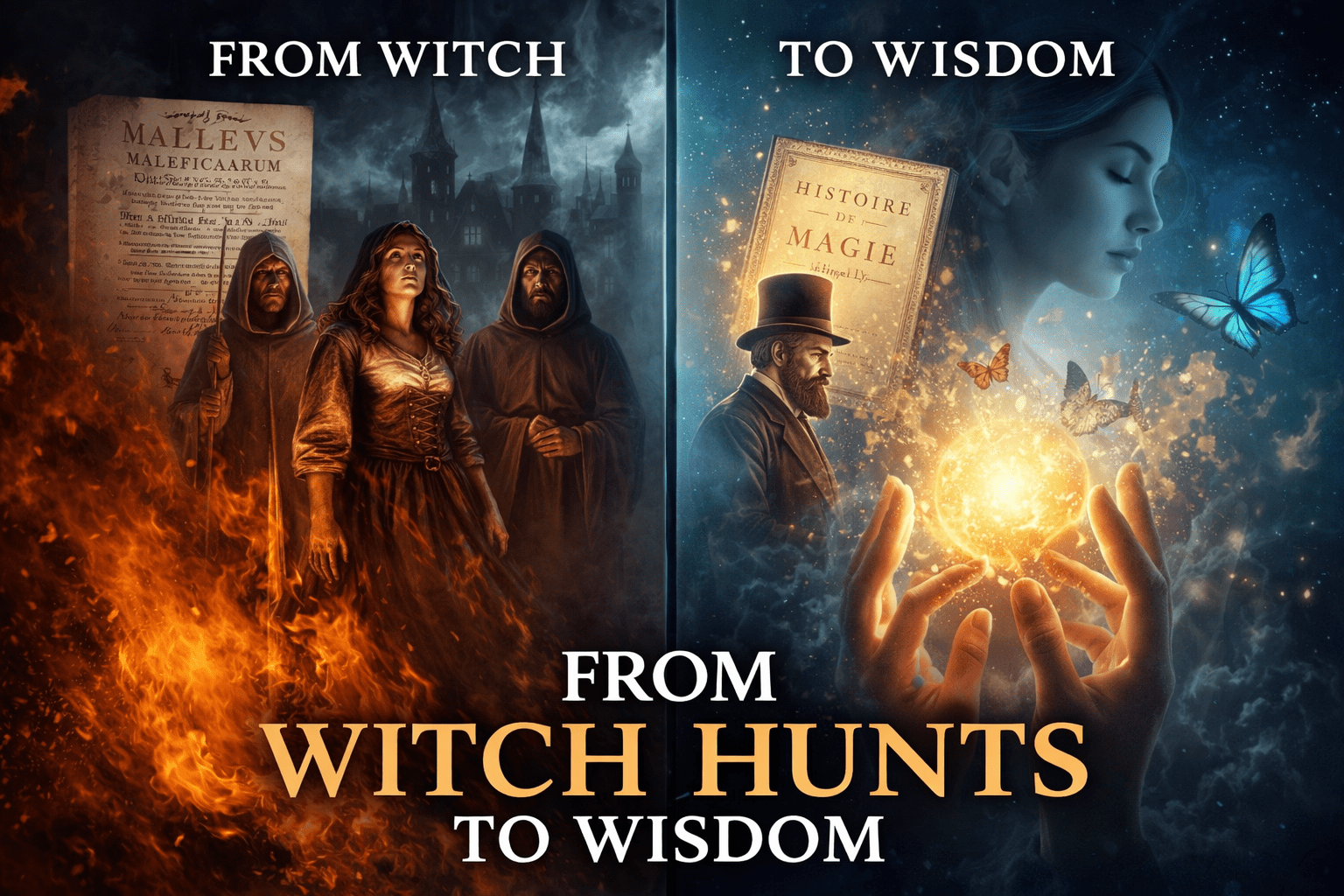
How Fear Shaped Spiritual History—and How We Reclaim Discernment Today
For centuries, experiences that today might be called intuition, sensitivity, or altered states of consciousness were once labeled something far darker: witchcraft. Few books illustrate this historical fear more starkly than Malleus Maleficarum, while few challenge it as effectively as Histoire de la magie by Éliphas Lévi.
Together, these two works reveal not only how spiritual experience was once misunderstood—but how humanity slowly learned to reinterpret fear as meaning rather than evil.
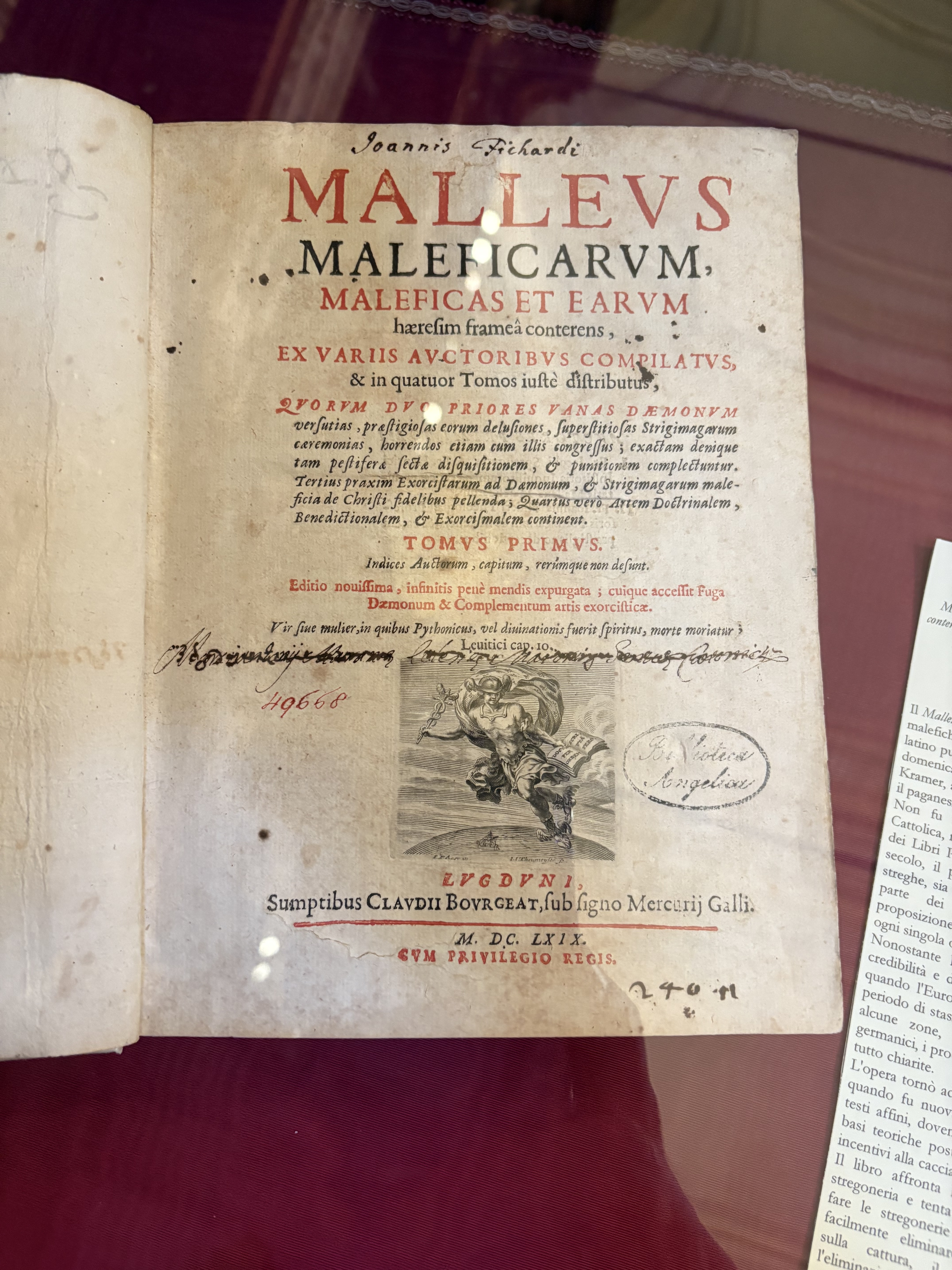
The Malleus Maleficarum: Fear Turned into Law
Written in 1486 by Dominican inquisitors Heinrich Kramer and Jakob Sprenger, the Malleus Maleficarum (“The Hammer of Witches”) was not a book about magic—it was a manual for persecution. Its purpose was to prove that witchcraft existed, that it was heretical, and that it required ruthless eradication.
The book argued that:
- Witchcraft was real and widespread
- Women were more prone to it due to moral and intellectual weakness
- Denying the existence of witches was itself heresy
- Torture was a legitimate means of discovering truth
Perhaps most chillingly, the Malleus asserted that belief was not optional. Skepticism was criminalized. Confessions—often extracted under extreme physical and psychological pressure—were treated as proof.
What modern readers recognize as moral panic, the Malleus framed as divine justice.
Symbol Taken Literally: The Core Error
One of the greatest dangers of the Malleus Maleficarum lies in its literal interpretation of symbolic material. Folklore, dreams, sexual anxiety, illness, trauma, and social tension were all interpreted as evidence of demonic conspiracy.
- Storms became curses.
- Illness became malefic intent.
- Sexuality became corruption.
- Visions became possession.
In this worldview, symbols were crimes—and people died for them.
Éliphas Lévi and Histoire de la magie: Reclaiming Meaning
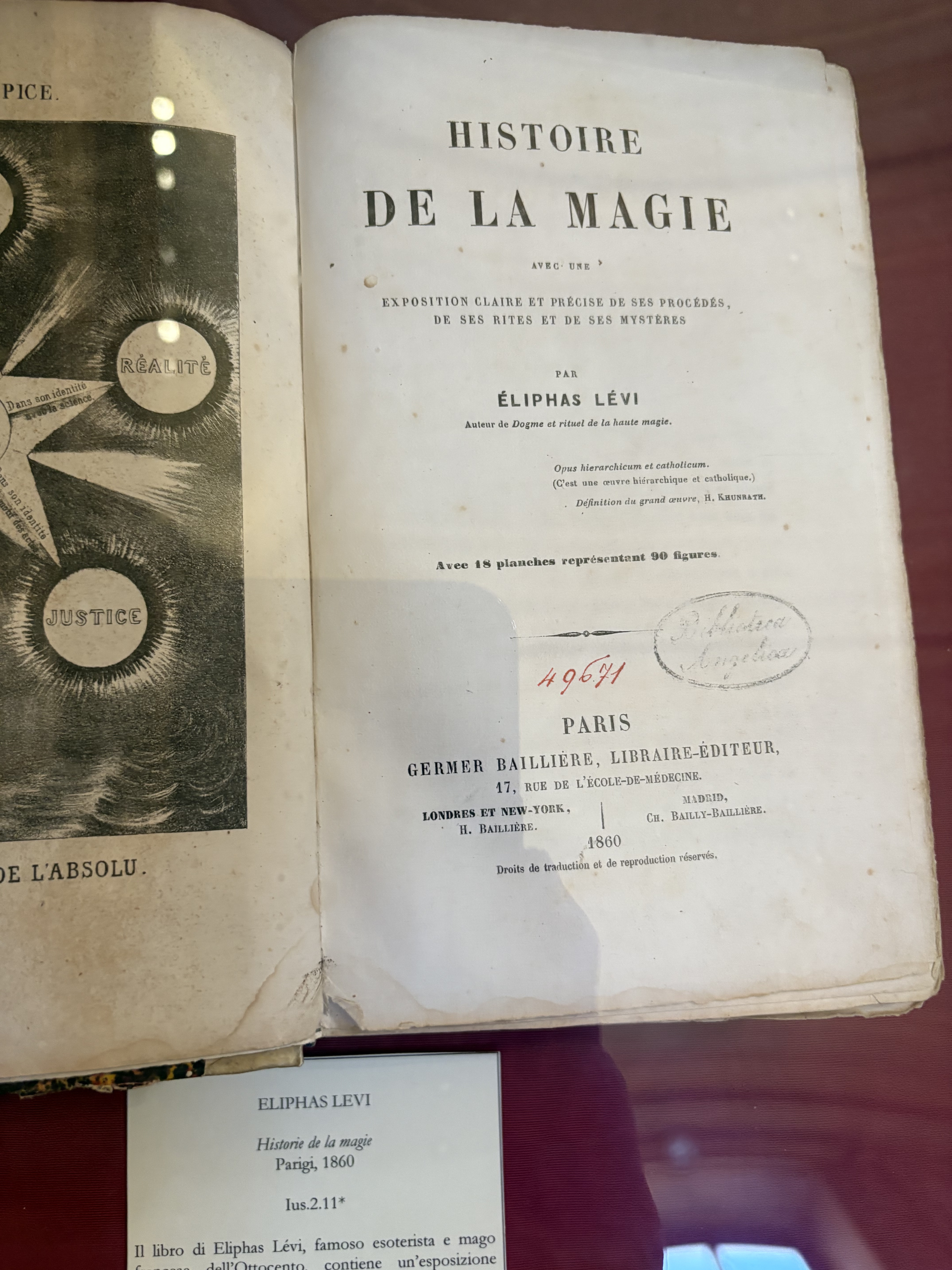
Nearly four centuries later, French occult philosopher Éliphas Lévi offered a radically different perspective in Histoire de la magie (1860). Lévi did not deny the existence of mystical experience—but he rejected the idea that it was demonic by nature.
Instead, Lévi argued that:
- Magic is a symbolic language of consciousness
- “Demons” represent inner psychological or moral forces
- Religious authorities mistook allegory for literal truth
- Persecution arose from ignorance, not spiritual necessity
Lévi famously suggested that the Middle Ages punished metaphors as crimes, confusing inner experience with external evil. Where the Malleus demanded obedience, Lévi encouraged interpretation. Where the Malleus feared intuition, Lévi studied it.
In many ways, Lévi stands at the crossroads between mysticism and what we now recognize as psychology.
Modern Perspectives: Intuition, Psychology, and Integration
Today, experiences once labeled witchcraft are often understood through more compassionate and grounded frameworks:
- Psychology recognizes trauma responses, dissociation, projection, and mass hysteria
- Neuroscience studies altered states and perception
- Spiritual traditions speak of intuition, mediumship, and symbolic awareness
- Ethical spiritual practice emphasizes grounding, consent, and discernment
The modern question is no longer “Is this demonic?”
It is “What is happening in the human experience, and how do we support it responsibly?”
This shift—from accusation to understanding—is the true legacy of moving beyond witch-hunt thinking.
Why This History Still Matters
The danger illustrated by the Malleus Maleficarum did not end with witch trials. Any time fear overrides discernment, or authority silences lived experience, the same pattern repeats.
Studying these texts reminds us:
- Fear can masquerade as righteousness
- Symbols become dangerous when misunderstood
- Spiritual experiences require context, ethics, and grounding
- True discernment protects people—it does not persecute them
Éliphas Lévi’s work, and modern integrative approaches, teach us that intuition itself was never the enemy. The enemy was fear mistaken for truth.
Conclusion
The Malleus Maleficarum shows us what happens when fear becomes law.
Histoire de la magie shows us how understanding can dismantle that fear.
Modern spiritual and psychological perspectives continue this work—not by denying mystery, but by holding it responsibly.
When we reclaim discernment, we ensure that symbols remain symbols, experiences remain human, and spirituality becomes a path of insight rather than harm.
References
- Kramer, H., & Sprenger, J. (1486/1487). Malleus Maleficarum. Various historical editions.
- Lévi, É. (1860). Histoire de la magie. Paris.
- Levack, B. P. (2016). The Witch-Hunt in Early Modern Europe. Routledge.
- Federici, S. (2004). Caliban and the Witch. Autonomedia.
- Jung, C. G. (1969). The Archetypes and the Collective Unconscious. Princeton University Press.
 Kevin Paul Psychic Medium